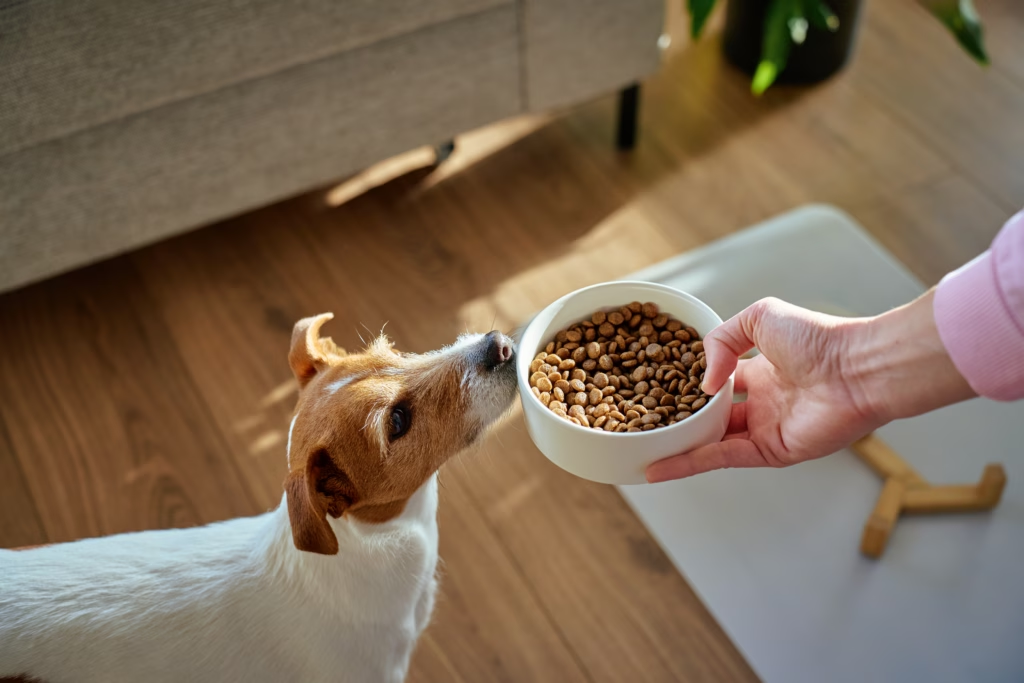
Choice is great, but it can also be overwhelming — especially in the pet food aisle. With so many options, choosing small breed dog food can be daunting. To make things easier, we’ve answered some of the most common questions pet owners ask when shopping for dog food for small breeds.
Quick Guide: Core Nutritional Needs for Small Breed Dogs
Looking for a quick summary of what makes small breed nutrition unique? Before diving into our full Q&A below, use this fast reference to understand the key factors to look for when choosing a small dog formula:
- Calorie Density: Small dogs require higher calorie-per-pound ratios due to their faster metabolic rates.
- Kibble Size: Small-jawed breeds may prefer small, bite-size kibble for easy chewing.
- Target Nutrient Categories: Formulas should feature high-quality proteins for lean muscle mass and omega fatty acids for skin and coat health.
What qualifies as a small breed dog?
While there’s no universal definition, many people consider dogs under 20 to 25 pounds to be small breeds.
Can I feed my small dog regular dog food?
Yes. Regular dog food is still nutritionally sound for your small dog. We offer many dog food products for all breed sizes that will fit your small dog.
What makes small breed dog food different from other dog foods?
Small breed dog food differs from food for larger dogs in several important ways:
- Nature’s Recipe™ and Rachael Ray® Nutrish™ small breed dog formulas are more energy dense. Pound for pound, small breeds of dogs typically need more calories than larger breeds.
- Small breed dog food typically features smaller kibble. Those smaller bites might be preferred for smaller mouths and teeth.
What if my small dog is a picky eater?
Don’t worry, there are plenty of small breed flavor options to choose from. A few favorites include:
- Rachael Ray® Nutrish™ Dry Dog Food Small Breed Real Chicken & Veggies Recipe
- Kibbles ‘n Bits™ Mini Bits Small Breed Savory Bacon & Steak Flavor Dry Dog Food
- Kibbles ‘n Bits™ Mini Bits Small Breed Bistro Oven Roasted Beef, Spring Vegetable & Apple Flavors Dry Dog Food
And for the most discerning of palates (or just for fun), you can also treat your pup to a home chef-inspired bowl recipe. These meals start with complete and balanced Rachel Ray® Nutrish™ dog food as the base that is then layered with high-quality ingredients rich in bowl-licking flavor .
Your dog will gobble up dishes like Jenn Lueke’s Shepherd’s Pie Bowl, Rachel Ray’s Surf & Turf Bowl or Beefin Smash Bowls.
What are the nutritional needs of small breed dogs?
Small dogs often need nutrient-dense food that delivers complete and balanced nutrition in smaller portions.
When comparing options, check the feeding guidance and calorie content on the package and talk with your veterinarian if your dog has specific needs or preferences.
Special formulations like Nature’s Recipe™ Grain Free Small Breed Chicken, Sweet Potato & Pumpkin Recipe Dry Dog Food are available for small breeds.
Are there considerations for small breeds at different life stages?
Dog food choices should reflect life stage as well as body size.
Because puppies and small dogs can be similar in size, you might assume puppy food would work well for a small adult dog. But a growing puppy’s nutritional needs differ from those of an adult dog.
At the other end of the spectrum, a small, senior dog may struggle to chew kibble meant for adult dogs, which is where wet dog food comes in.
Thankfully, for small breed dog owners, there are many dry and wet dog food options that provide the vitamins, minerals, and nutrients dogs need at each life stage in an array of tasty flavors.
Dry vs. wet food for small breeds — what’s the better option?
The answer to this question depends on the dog’s age, needs and preferences. Talk to your veterinarian for advice on the best choice for your dog.
How much should I feed my small breed dog?
Dogs differ in terms of how much energy they need each day. Their breed, age, size, activity levels, and eating frequency all come into play. Our labels provide a good starting point, and you can work with your veterinarian to customize portions even further. Check the product’s packaging or the product’s page on the respective brand site for feeding instructions.
How do I switch my small dog to a new food?
You can ease the transition to a new small breed dog food by making the switch gradually over a one- or two-week period. Introducing a new recipe gradually can give their bodies time to adjust.
Start by mixing the old dog food with your new small breed dog food, beginning with about 75% old food and 25% new food. Increase the amount of the new brand slowly, hitting the 50/50 mark around Day 4 to Day 6, and phasing out the previous dog food by the one- to two-week mark.
Quick Guide: Post Consumer Brands Small Breed Dog Foods
Looking for nutrition tailored to a small dog’s specific needs? Small breed dogs require precise calorie densities and specialized kibble sizes. This quick-reference directory pairs our small breed formulas directly with your small dog’s needs:
| If you’re looking for… | Then we recommend…. |
|---|---|
| Small Breed Kibble Management: For dogs that prefer a smaller kibble size. | Rachael Ray® Nutrish™ Dry Dog Food Small Breed Real Chicken & Veggies |
| Grain-Free Kibble: For formulas that don’t use grains such as wheat, corn or oats. | Nature’s Recipe™ Grain Free Small Breed Chicken, Sweet Potato and Pumpkin Recipe Dry Dog Food |
| Natural Dog Food: For balanced nutrition using natural ingredients with added vitamins, minerals and nutrients. | Nature’s Recipe™ Small Bites Chicken, Barley & Brown Rice Dry Dog Food |
| Savory Flavors: For picky eaters that prefer flavor-forward meat profiles. | Kibbles ‘n Bits™ Mini Bits Small Breed Savory Bacon and Steak Flavor or Kibbles ‘n Bits™ Mini Small Breed Bistro Oven Roasted Beef, Spring Vegetable, and Apple Flavors or Kibbles ‘n Bits™ Mini Bits Small Breed Savory Beef and Chicken Flavors Dry Dog Food. |
Find top brands for small breed dog food
Loving on these little balls of fur and energy is easy. And choosing food that helps them be healthy and happy can be, too. Select your preferred brand and find a small breed dog food near you.